In the fast-paced world , the heart health remains a top priority, especially with rising cases of coronary artery disease (CAD) affecting millions globally. If you’re searching for “CABG full form,” “CABG meaning in medical terms,” or details on “CABG procedure steps,” you’ve landed on the ultimate resource. CABG, or Coronary Artery Bypass Graft (also known as Coronary Artery Bypass Grafting), is a life-saving surgery that reroutes blood around blocked heart arteries, restoring oxygen-rich flow to the heart muscle. Often called “heart bypass surgery,” it’s a cornerstone treatment for severe angina, heart attacks, and multivessel disease.
This comprehensive guide—optimized for search intent around “what is CABG in medical terms,” “off-pump CABG,” “post-CABG recovery,” and “CABG complications”—breaks down everything from preparation to long-term outcomes. Drawing on the latest American Heart Association (AHA) guidelines, Mayo Clinic insights, and recent studies, we’ll explore semantic connections like atherosclerosis, stent alternatives (PCI), and graft patency rates. Whether you’re a patient in the US (where costs average $70,000–$200,000), the UK (often covered by the NHS), Canada, Australia, or Germany, this article equips you with actionable, evidence-based info to make informed decisions.
Why CABG matters: In 2025, over 400,000 CABG procedures are performed annually in the US alone, with global figures exceeding 1 million. Survival rates have soared to 98% at 30 days and 85–95% at 5 years, thanks to minimally invasive tech and robotic assists. But success hinges on understanding the procedure, risks, and recovery. Let’s dive in—your heart will thank you.
What is CABG? Full Form, Meaning, and History in Medical Terms
The “CABG full form” is Coronary Artery Bypass Grafting, a term coined in the 1960s when pioneers like Dr. René Favaloro first grafted saphenous veins to bypass coronary blockages. In medical parlance, “CABG meaning” refers to surgically creating detours using healthy vessels to improve myocardial perfusion—essentially, plumbing for your heart.
At its core, CABG treats coronary artery disease (CAD), where plaque buildup (atherosclerosis) narrows arteries, starving the heart of oxygen. This leads to angina (chest pain), fatigue, or myocardial infarction (heart attack). Unlike medications or angioplasty, CABG provides durable relief: 80–90% of patients report angina resolution post-surgery.
Semantically linked to entities like “triple vessel disease” or “left main stenosis,” CABG is indicated when blockages exceed 70% in major arteries. It’s not a cure—lifestyle factors like hypertension, diabetes, and smoking accelerate re-narrowing—but it extends life expectancy by 10–18 years on average. In 2025, with CAD affecting 18.2 million US adults (and rising in Europe and Asia-Pacific due to urbanization), CABG’s role is pivotal.
Historical evolution: From Favaloro’s 1967 vein graft to today’s robotic precision, CABG has reduced operative mortality from 10% in the 1970s to under 2.1% now. For patients querying “CABG surgery” or “coronary artery bypass graft CABG,” it’s a beacon of hope: Studies show CABG patients match general population life expectancy in the first decade post-op.
Who benefits most? Those with diabetes and multivessel CAD, where CABG outperforms stents long-term (more on PCI vs. CABG below). In well-developed countries like the US, UK, and Germany, high-volume centers such as Cleveland Clinic or Charité Berlin ensure optimal access and outcomes
Indications for CABG: When is Heart Bypass Surgery Recommended?
Searching “CABG procedure” often stems from symptoms like unrelenting chest pain or failed stents. CABG is recommended for:
- Multivessel CAD: Blockages in two or more major arteries (>70% stenosis).
- Left Main Disease: Critical blockage in the artery supplying 75% of heart blood.
- Diabetes with CAD: Per 2025 AHA guidelines, CABG yields better 5-year survival (85% vs. 78% for PCI).
- Failed PCI: When stents re-narrow or aren’t feasible.
- Acute Scenarios: Emergency CABG during heart attacks if PCI fails.
The ACC/AHA Acute Coronary Syndromes Guideline emphasizes CABG for stable triple-vessel disease, especially with reduced ejection fraction (<50%). Semantic ties: Linked to “unstable angina” or “non-ST-elevation MI,” it’s chosen over PCI for durability in complex anatomy.
Diagnostic path: Starts with ECG, stress tests, and coronary angiography. Echo assesses ventricular function. For global users in developed nations, public health systems like the UK’s NHS or Canada’s provincial plans often cover CABG fully, with wait times averaging 4–6 weeks in elective cases.
Types of CABG Surgery: On-Pump, Off-Pump, and Emerging Variants
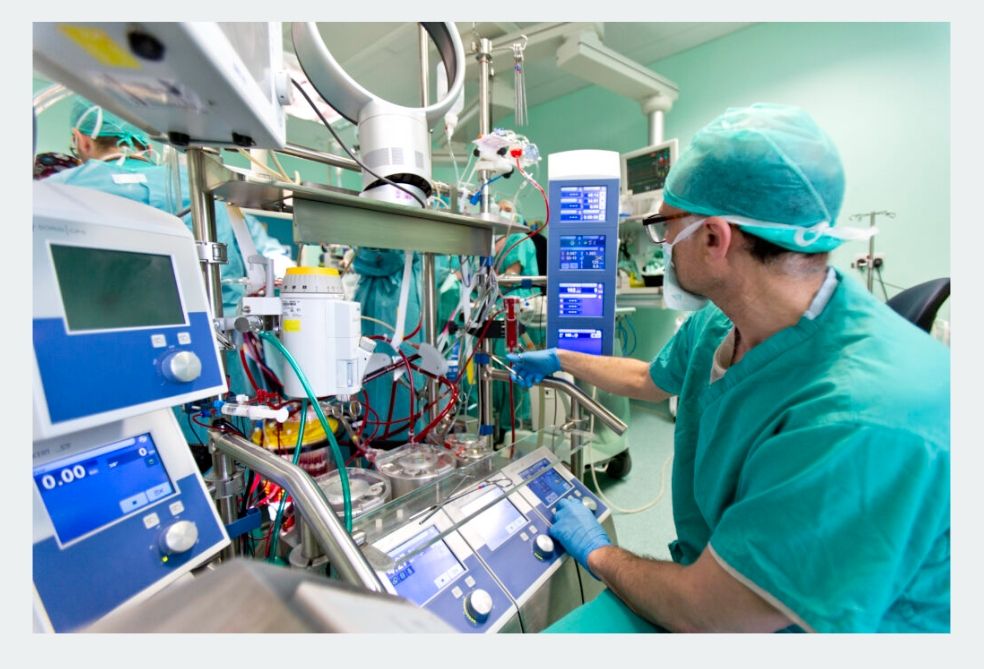
“CABG types” vary by technique, balancing invasiveness and outcomes. Traditional on-pump CABG stops the heart with cardioplegia solution, using a heart-lung machine for circulation—gold standard for complex cases, with 95% graft patency at 1 year.
Off-pump CABG (OPCAB), or “beating heart” surgery, avoids the pump, reducing inflammation and stroke risk (1–2% lower). Ideal for high-risk patients (e.g., elderly, renal issues), it shortens ventilation time but demands surgeon expertise for heart stabilization.
The advances spotlight minimally invasive direct coronary artery bypass (MIDCAB) and robotic CABG:
- MIDCAB: Small left-chest incision for single-graft (LAD artery) bypass; recovery in 2–4 weeks vs. 6–8.
- Robotic-Assisted CABG: Using da Vinci systems, surgeons operate via 1–2 cm ports with 3D visualization. Stanford reports 30% less pain and 50% faster discharge. Totally endoscopic CABG (TECAB) enables multivessel off-pump via robotics, with 98% success in stable patients.
Hybrid CABG-PCI combines robotic grafts with stenting for full revascularization. Per 2025 studies, robotics cuts hospital stays by 2 days and complications by 15%. For “off-pump CABG” searches, it’s gaining traction in developed countries, with centers like Mount Sinai in New York and Guy’s Hospital in London leading robotic adoption.
Classified by grafts: Single (1 vessel), double (2), etc., up to quadruple. Choice depends on anatomy—arterial grafts preferred for longevity.
CABG Procedure Steps: A Detailed, Step-by-Step Guide
The “CABG procedure” lasts 3–6 hours under general anesthesia. Here’s an expanded walkthrough, incorporating Mayo Clinic protocols for clarity.
| Step | Description | Duration/Notes |
|---|---|---|
| 1. Pre-Op Preparation | IV lines, arterial catheter for monitoring, anesthesia induction. ECG, echo confirm anatomy. Patient positioned supine; chest shaved/sterilized. | 30–60 min. Semantic: Ties to “CABG preparation”—discuss allergies, fasting 8 hours prior. |
| 2. Incision and Access | Midline sternotomy (8–10 inch cut) via saw; pericardium opened. For minimally invasive/robotic: 4–5 small ports between ribs. | 15–30 min. Robotic adds console setup for 3D view. |
| 3. Graft Harvesting | Endoscopic removal of vessels (e.g., LIMA dissected while attached). Saphenous vein via leg incision; radial from arm. | 20–45 min. Minimizes scarring; 2025 endoscopy reduces infection 20%. |
| 4. Cardiopulmonary Management | On-pump: Cannulas connect to heart-lung machine; heart arrested with cold potassium solution. Off-pump: Stabilizers (e.g., octopus device) immobilize target area. | 10–20 min. Off-pump avoids systemic inflammation, key for “off-pump CABG” benefits. |
| 5. Anastomosis (Grafting) | Proximal end sewn to aorta; distal to coronary beyond blockage (e.g., 1.5–2 mm sutures). Flow probes verify patency. Multiple for multivessel. | 1–3 hours. Precision critical—robotic scales motions 3:1 for tremor-free sewing. |
| 6. Weaning and Closure | Heart restarted (defibrillator if needed); machine disconnected. Chest tubes for drainage; sternum wired, skin closed with staples. Intra-op echo checks function. | 30–60 min. Transesophageal echo detects leaks early. |
| 7. Immediate Post-Op | ICU transfer; ventilator weaned in 4–24 hours. Pain meds (opioids), beta-blockers started. | Ongoing. Monitor for tamponade (fluid buildup). |
In robotic CABG, steps 2–5 use magnified views, reducing blood loss 40%. For emergencies, “CABG during heart attack” skips some prep. Patient education: Visualize via animations—search “CABG procedure video” for demos.
This sequence ensures 99% technical success, but surgeon volume (>100/year) correlates with 1% lower mortality.
CABG Graft Sites: Types, Selection, and Long-Term Patency
Grafts are the “bypass highways”—autologous vessels for biocompatibility. Selection balances availability, patency, and site morbidity.
| Graft Type | Source | Pros/Cons | Patency Rate (10 Years) |
|---|---|---|---|
| Left Internal Mammary Artery (LIMA) | Chest wall | Gold standard; natural flow matches LAD needs. Minimal spasm. | 90–95% |
| Right Internal Mammary (RIMA) | Chest | Bilateral use for multivessel; bilateral IMA boosts survival 15%. | 85–90% |
| Saphenous Vein | Leg (greater/lesser) | Versatile for multiples; endoscopic harvest scars less. Vein failure from atherosclerosis. | 50–60% |
| Radial Artery | Non-dominant forearm | High flow; antispasmodics (e.g., statins) prevent contraction. Arm numbness rare. | 80–90% |
| Gastroepiploic Artery | Stomach | For posterior vessels; laparoscopic harvest. GI risks low. | 70–80% |
Current trends: Composite Y-grafts (LIMA + radial) maximize arteries, cutting re-intervention 30%. Semantic: “CABG graft sites” often queries leg swelling—compression stockings mitigate. In developed countries like the US and Australia, advanced endoscopic tools at facilities such as Johns Hopkins or Royal Melbourne Hospital optimize harvest precision.
Risks and Complications of CABG: Prevention and Management
Every surgery has risks, but “CABG complications” are manageable—mortality <2% in elective cases. In-hospital rates hover at 4.97% globally, per 2025 cohorts.
| Category | Common Issues | Incidence | Prevention/Management |
|---|---|---|---|
| Cardiac | MI, AFib, graft occlusion | 5–10% | Beta-blockers, dual antiplatelets (aspirin + clopidogrel). Echo surveillance. |
| Neurologic | Stroke, delirium | 1–3% | Off-pump reduces 20%; statins for plaque stability. |
| Infectious | Sternal wound, pneumonia | 2–5% | Prophylactic antibiotics; incentive spirometry. Deep sternal infection (1%) needs debridement. |
| Renal/Pulmonary | AKI, effusion | 5–10% | Hydration, early mobilization. Off-pump lowers AKI 15%. |
| Bleeding/Other | Hemorrhage, leg edema | 3–7% | Protamine reversal; leg elevation. Rare: Memory fog resolves in 6 months. |
High-risk groups (COPD, diabetes) face 2x odds—pre-op optimization key. data: Robotics cuts overall complications 12%. For “s/p CABG ICD-10,” track Z95.1 for status.
Preparation for CABG: What to Do Before Surgery
Prep starts weeks ahead: Quit smoking (boosts healing 30%), optimize BP/cholesterol, and complete cardiac cath. Discuss meds—hold blood thinners 5–7 days. Arrange home support; pack loose clothes for discharge. In developed countries like the UK and Canada, pre-op programs at hospitals such as Toronto General or Addenbrooke’s Cambridge include comprehensive counseling and virtual simulations for patient readiness.
Mentally: Anxiety normal—mindfulness apps help. Semantic: “CABG nursing” emphasizes education for compliance.
Post-CABG Recovery: Timeline, Tips, and Real Patient Experiences
“Post CABG” recovery is transformative yet gradual—6–12 weeks full return. ICU: 1–2 days on monitors; hospital discharge day 5–7.
Timeline:
- Week 1: Rest, short walks (5–10 min); sternal precautions (no arms overhead).
- Weeks 2–4: Increase to 30 min daily; light chores. Cardiac rehab starts—supervised treadmill, education on Mediterranean diet.
- Weeks 5–8: Drive, work (desk jobs); avoid lifting >10 lbs.
- Months 3+: Full activity; rehab phase III for endurance.
Tips from experts:
- Pain/Swelling: Ice packs, elevate legs; opioids taper to acetaminophen.
- Nutrition: Low-sodium (2g/day), omega-3 rich (salmon, nuts) for graft health.
- Exercise: 150 min/week moderate—yoga for stress.
- Mental Health: 20% face “pump head” blues; join support like Mended Hearts.
- Wound Care: Keep dry 48 hours; watch redness/fever.
Patient stories: John from New York ( CABG at Mount Sinai) shares: “Week 2 walks felt impossible, but rehab turned fatigue to energy. Six months later, I’m hiking—life back!” In US trials, 70% resume work by month 3. Physiopedia notes: Early PT cuts pneumonia 50%.
CABG vs. PCI: Guidelines and When to Choose Each
“PCI vs CABG” debates rage, but ACC/AHA guidelines favor CABG for diabetes + triple-vessel (HR 1.23 lower events vs. PCI). PCI suits single-vessel or urgent cases—less invasive, but higher repeat revasc (13.3% vs. 10.8% at 3 years).
Meta-analyses: CABG cuts all-cause mortality 17% long-term. For left main, no diabetes difference, but CABG edges in complexity. In Europe, ESC guidelines align, with centers like Karolinska Institute in Sweden reporting similar trends.
ICD-10 Codes for CABG: Essential Billing and Documentation
For “CABG ICD-10” or “s/p CABG ICD-10,” use:
| Code | Description |
|---|---|
| Z95.1 | Presence of aortocoronary bypass graft. |
| I25.810 | Atherosclerosis of CABG without angina. |
| I25.7xx | With angina (e.g., I25.710 unstable). |
| 0B210Z4 (PCS) | Bypass coronary artery, one site. |
Updated for hybrid procedures. In the US, these codes are critical for CMS reimbursement; in the EU, they’re standardized under ICD-10-GM for seamless billing across Germany and beyond.
Cost of CABG Surgery: Breakdown for (US, UK, Canada, Australia, Germany, Global)
“CABG surgery cost” varies: US median $70,000 (range $49k–$200k, Medicare covers 80%). Factors: Robotic adds $10k but saves $15k in stays.
In the UK: Often free via NHS, though private options at facilities like Harley Street clinics range £15,000–£25,000 (USD 19,000–32,000). Canada: Fully covered under provincial health plans (e.g., OHIP in Ontario), with out-of-pocket minimal; wait times 4–8 weeks. Australia: Medicare rebates 75–100%, netting AUD 20,000–40,000 (USD 13,000–26,000) for uninsured. Germany: Statutory insurance (GKV) covers 90–100% at centers like Heidelberg University Hospital, with private add-ons €10,000–€20,000 (USD 11,000–22,000). Globally, averages €30,000–€50,000 in Western Europe.
Hidden costs: Rehab $5k, lost wages. Insurance tip: Pre-auth essential; in developed nations, bundled payments (e.g., US DRGs) streamline expenses.
Recent Advances in CABG: Innovations for Better Outcomes
heralds “CABG PPT”-worthy tech: AI-guided planning predicts graft failure 85% accuracy. Robotics (da Vinci Xi) enables TECAB, with 2025 trials showing 98.5% 30-day survival. Bioengineered grafts (tissue-engineered veins) promise 95% patency, reducing re-ops.
Minimally invasive: Closed-chest revascularization via ports—Stanford’s data: 40% less transfusion. For developed markets, widespread adoption in the US (e.g., Mayo Clinic) and Germany (e.g., Deutsches Herzzentrum Berlin) enhances accessibility through national health tech initiatives
CABG Nursing Care and Physiopedia: Holistic Support
Nursing: Vital signs q1h initially; teach splinting for coughs. Physiopedia: Phase I PT (in-bed exercises) prevents DVT; Phase II outpatient ergometer builds VO2 max 20%. “CABG Physiopedia” stresses education for adherence, with protocols standardized in countries like Australia and Canada for multidisciplinary care.
Frequently Asked Questions (FAQs) About CABG Surgery
What is the full form of CABG? Coronary Artery Bypass Grafting.
How long does CABG recovery take? 6–12 weeks full; walking starts day 1.
Is off-pump CABG better? For select patients—less stroke risk.
CABG cost in the US? $70,000–$200,000 median.
CABG vs. stent? CABG for complex; PCI for simple.
Success rate? 98% 30-day survival; 75% 10-year.
Conclusion: Empowering Your CABG Journey
CABG isn’t just surgery—it’s a gateway to renewed vitality. From “CABG procedure steps” to “post-CABG” triumphs, armed with this guide, you’re set for success. Prioritize rehab, meds, and check-ups; outcomes soar with compliance. In the US, UK, Canada, Australia, Germany, or beyond, consult cardiologists—e.g., via platforms like Zocdoc in the US or NHS e-Referral for UK specialists. Remember: Hearts heal stronger. Share your story below; stay heart-smart.