Introduction: Why Perfusionist Certifications Are Essential for Career Growth
In the high-stakes world of cardiac surgery, perfusionist certifications are not just credentials—they’re powerful career accelerators. As a perfusionist, your expertise in operating heart-lung machines and managing extracorporeal circulation literally keeps patients alive during complex procedures. But how do you demonstrate this specialized skill to employers and advance in this competitive field? The answer lies in strategic perfusionist certification attainment.
With only about 4,000 practicing perfusionists in the United States and demand growing 7-10% annually, certified professionals command significantly higher salaries, greater job security, and enhanced professional respect. This comprehensive guide explores the top 10 most valuable perfusionist certifications that can transform your career trajectory, increase your earning potential by up to $50,000 annually, and establish you as a leader in cardiovascular medicine.
Understanding Perfusionist Certifications: What They Are and Why They Matter
Perfusionist certifications are formal credentials issued by professional organizations that validate your expertise in managing extracorporeal circulation—the critical process of temporarily taking over heart and lung functions during life-saving surgeries. These certifications represent the difference between being a competent technician and becoming a trusted clinical specialist with advanced capabilities.
Key benefits of obtaining perfusionist certifications include:
- 85% of major hospitals require certification for perfusionist positions
- Certified professionals earn 15-35% more than non-certified counterparts
- Specialized credentials open doors to leadership roles and niche specialties
- Ongoing certification demonstrates commitment to excellence and patient safety
- Professional mobility increases with nationally recognized credentials
Table of Contents
Top 10 Perfusionist Certifications for Career Advancement
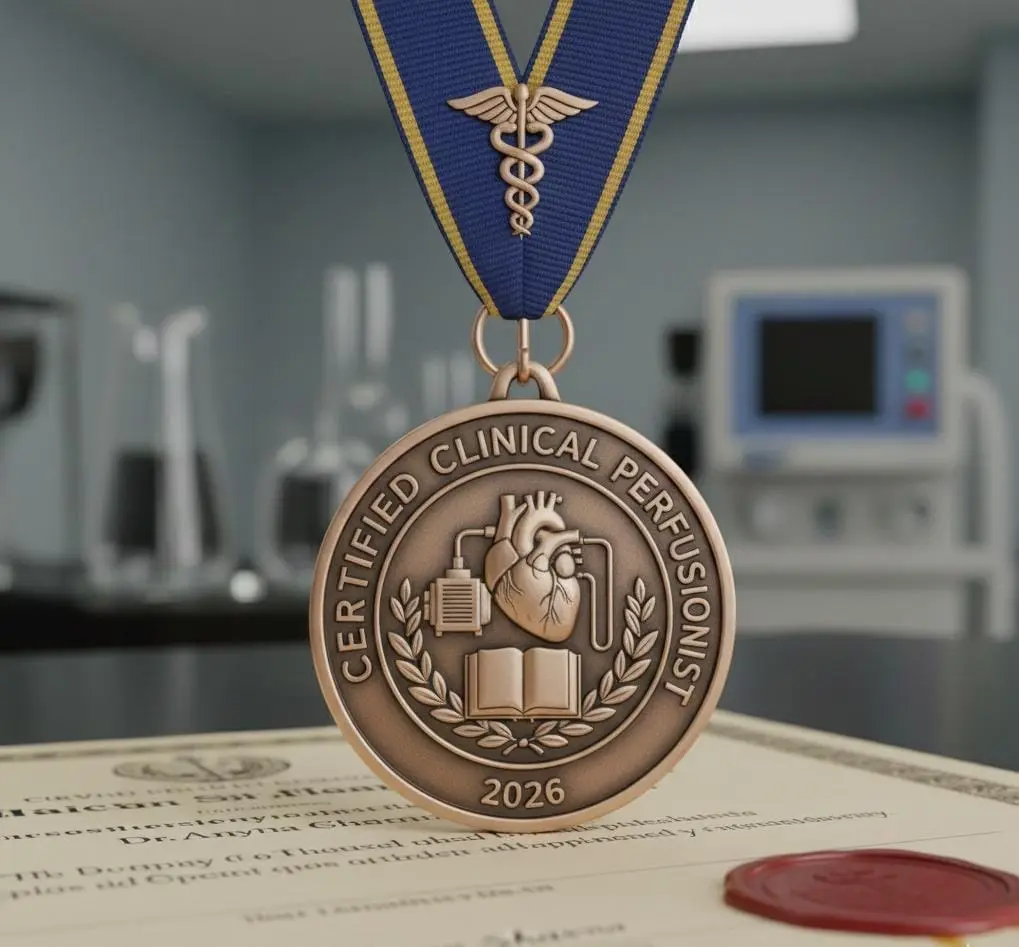
1. Certified Clinical Perfusionist (CCP) – The Essential Foundation
Overview: The Certified Clinical Perfusionist (CCP) credential, administered by the American Board of Cardiovascular Perfusion (ABCP), represents the non-negotiable foundation for every perfusion career in the United States. This is the most critical of all perfusionist certifications—without it, your job prospects are severely limited.
Why This Certification Matters:
- Legal Requirement: Mandatory in 18+ states including California, Texas, and New York
- Employment Standard: Required by 90% of hospital systems nationwide
- Career Foundation: All advanced specializations build upon this credential
- Salary Impact: Entry-level perfusionists with CCP earn $110,000-$135,000 versus $60,000-$85,000 without
Requirements & Process:
- Education: Graduation from CAAHEP-accredited perfusion program
- Clinical Experience: Minimum 75 supervised cases
- Examinations: Two-part testing covering basic sciences and clinical applications
- Cost: $1,200-$1,900 initial investment
- Maintenance: 45 Continuing Education Units every three years
Best For: Every perfusionist—this is the mandatory starting point for all career paths.
2. Certified Pediatric Perfusionist (CPP) – Specializing in Pediatric Care
Overview: Among specialized perfusionist certifications, the Certified Pediatric Perfusionist (CPP) credential validates expertise in managing the unique challenges of neonatal and pediatric cardiac cases. This certification, developed with the American Academy of Pediatrics, represents one of the most delicate and technically demanding specialties in perfusion.
Career Advantages:
- High Demand: Only about 800 CPP-certified perfusionists nationwide
- Salary Premium: $135,000-$170,000 range for experienced CPPs
- Job Security: Positions in prestigious children’s hospitals with lower turnover
- Professional Fulfillment: High-impact work with lifelong patient relationships
Certification Pathway:
- Prerequisites: Current CCP certification with 2+ years general experience
- Pediatric Focus: Minimum 50 pediatric cases as primary perfusionist
- Specialized Training: Pediatric perfusion fellowship or equivalent
- Examination: Focus on neonatal physiology and congenital heart disease
Investment: $750-950 exam fee plus specialized training costs
Best For: Perfusionists with exceptional patience, precision, and passion for pediatric care.
3. Extracorporeal Life Support (ECLS) Specialist – Expanding into Critical Care
Overview: The ECLS Specialist certification represents the evolution of perfusion practice beyond the operating room into broader applications of extracorporeal technology. This credential, often considered among the most valuable advanced perfusionist certifications, validates expertise in ECMO (Extracorporeal Membrane Oxygenation) management—a skill in unprecedented demand post-COVID.
Why This Certification Is Surging in Relevance:
- 400% Growth: ECMO utilization has exploded since 2020
- Career Expansion: Opens doors to ICU-based practice and mobile ECMO teams
- Salary Impact: +$20,000-$30,000 for ECMO specialist roles
- Future-Proofing: Positions you at the forefront of life support technology
Certification Requirements:
- Clinical Experience: 100+ hours of direct ECMO patient management
- Education: ELSO-approved ECMO specialist course completion
- Examination: 150 questions on circuit management and complication handling
- Cost: $2,000-$4,000 total investment
Practice Settings: Cardiovascular ICUs, mobile transport teams, transplant centers
Best For: Perfusionists seeking to expand into critical care and join healthcare’s technological forefront.
4. Certified Cardiothoracic Perfusionist (CTP) – Advanced Thoracic Expertise
Overview: The Certified Cardiothoracic Perfusionist (CTP) credential represents an advanced tier of perfusionist certifications focusing on thoracic surgeries beyond traditional cardiac procedures. This certification validates expertise in perfusion support for lung surgeries, esophageal procedures, and complex thoracic oncology cases.
Professional Differentiation:
- Procedure Expansion: Covers perfusion for lung transplants and thoracic aortic repairs
- Market Rarity: Fewer than 1,500 CTP-certified perfusionists nationwide
- Team Leadership: Positions you as crucial member of comprehensive thoracic surgery teams
- Salary Enhancement: +$15,000-$25,000 over base CCP compensation
Certification Details:
- Prerequisite: Current CCP credential in good standing
- Experience: 2+ years general perfusion practice with thoracic focus
- Examination: Computer-based testing on thoracic surgical anatomy and techniques
- Investment: $1,600-$2,800 including preparation and exam fees
Best For: Perfusionists seeking to expand beyond cardiac surgery into comprehensive thoracic care.
5. Certified Extracorporeal Technology Specialist (CET) – Broad Technology Mastery
Overview: Among versatile perfusionist certifications, the Certified Extracorporeal Technology Specialist (CET) credential validates broad expertise across extracorporeal technologies. Administered by the American Society of ExtraCorporeal Technology (AmSECT), this certification covers ECMO, autotransfusion, cell salvage, and other advanced circulatory support systems.
Career Value Proposition:
- Technology Integration: Combines perfusion expertise with multiple support technologies
- Versatility: Qualifications for varied clinical and industry roles
- Innovation Position: At the forefront of extracorporeal technology development
- Economic Impact: Skills that save hospitals $500-$800 per case in blood product costs
Pathway to Certification:
- Education: Bachelor’s degree in science or healthcare field
- Clinical Hours: 100+ hours of direct technology management
- Examination: Comprehensive testing on multiple extracorporeal systems
- Cost: $500-$700 for members ($650-$850 non-members)
Best For: Technologically-minded perfusionists interested in broad equipment expertise.
6. Certified Clinical Hemodynamic Monitoring Specialist (CCHMS) – Data Interpretation Excellence
Overview: In today’s data-driven healthcare environment, the Certified Clinical Hemodynamic Monitoring Specialist (CCHMS) credential represents the pinnacle of monitoring expertise among perfusionist certifications. Offered through the American Society of Anesthesiologists, this certification validates advanced skills in interpreting complex physiological data and making real-time clinical decisions.
The Precision Advantage:
- Risk Reduction: Earlier identification of hemodynamic instability
- Team Collaboration: Enhanced communication with anesthesiology colleagues
- Outcome Improvement: Correlated with reduced complications in high-risk cases
- Salary Enhancement: +$10,000-$20,000 for monitoring expertise
Certification Requirements:
- Clinical Foundation: Current perfusionist credentials with high-acuity experience
- Advanced Training: Coursework in cardiovascular physiology and monitoring technologies
- Examination: Focus on invasive pressure monitoring and data interpretation
- Investment: $2,100-$3,800 total
Best For: Detail-oriented perfusionists who excel at data interpretation and precision management.
7. Registered Respiratory Therapist in Cardiopulmonary Perfusion (RRT-CPP) – Integrated Care Expertise
Overview: The Registered Respiratory Therapist in Cardiopulmonary Perfusion (RRT-CPP) credential represents a strategic bridge between specialties in the landscape of perfusionist certifications. This certification validates advanced competency in managing the intricate interplay between ventilation and perfusion—particularly crucial in cases of severe respiratory failure and complex cardiopulmonary conditions.
Integration Benefits:
- Holistic Management: Addresses both ventilatory and circulatory needs simultaneously
- COVID-Era Relevance: Critical for managing severe ARDS and respiratory failure
- Team Leadership: Positions you to coordinate between respiratory and perfusion teams
- Career Transformation: $95,000-$125,000 salary range versus $65,000-$85,000 for base RRT
Certification Journey:
- Foundation: Current Registered Respiratory Therapist (RRT) certification
- Perfusion Education: 12-18 credit hours of perfusion-specific coursework
- Clinical Training: 6-12 months of supervised perfusion practice
- Total Investment: $5,400-$10,600
Best For: Respiratory therapists expanding into perfusion or perfusionists wanting deeper respiratory expertise.
8. Certified Healthcare Simulation Educator (CHSE) – Educational Leadership
Overview: For perfusionists drawn to teaching, the Certified Healthcare Simulation Educator (CHSE) credential represents a career-expanding option among perfusionist certifications. This certification validates expertise in designing, implementing, and debriefing simulation-based learning experiences—a critical skill as perfusion education increasingly relies on high-fidelity simulation.
Educational Impact:
- Safety Training: Allows practice of emergency scenarios in risk-free environments
- Standardization: Ensures consistent training across institutions
- Academic Careers: Opens doors to perfusion program faculty positions
- Work-Life Balance: Often more predictable schedules than clinical roles
Certification Pathway:
- Experience: Healthcare professional with simulation teaching background
- Portfolio: Documentation of simulation teaching hours and scenario development
- Examination: Simulation methodology and educational best practices
- Investment: $1,400-$2,600
Best For: Experienced perfusionists passionate about teaching and educational innovation.
9. Certified Perfusion Informatics Specialist (CPIS) – Technology Integration
Overview: As healthcare becomes increasingly digital, the Certified Perfusion Informatics Specialist (CPIS) credential represents an emerging frontier among perfusionist certifications. This certification validates skills in optimizing electronic health records for perfusion documentation, integrating perfusion data with hospital systems, and leveraging data analytics to improve outcomes.
Digital Transformation Value:
- EHR Optimization: Tailoring systems for efficient perfusion documentation
- Data Integration: Connecting perfusion data with broader hospital metrics
- Analytics Leadership: Using data to drive quality improvement
- Salary Premium: +$15,000-$25,000 over clinical-only roles
Skill Development:
- Dual Expertise: Clinical perfusion background with healthcare IT proficiency
- Practical Application: EHR configuration and data interface management
- Implementation: Developing automated documentation tools and quality dashboards
- Future Growth: Increasing demand as healthcare digitization accelerates
Best For: Technologically savvy perfusionists interested in system optimization and data management.
10. Advanced Practice Provider in Cardiopulmonary Perfusion (APP-CPP) – Executive Leadership
Overview: The Advanced Practice Provider in Cardiopulmonary Perfusion (APP-CPP) represents the highest tier of perfusionist certifications—an executive-level credential designed for seasoned professionals seeking leadership, research, and advanced practice roles. This certification validates not only clinical excellence but also administrative competence and leadership capability.
Executive Distinction:
- Leadership Qualification: Prepares for department director and administrative roles
- Research Credentialing: Validates capability for independent research
- Policy Influence: Positions holders to contribute to practice guidelines
- Salary Range: $160,000-$250,000+ in leadership positions
Comprehensive Requirements:
- Experience: 8-10 years of progressive perfusion experience
- Education: Often requires or recommends graduate degrees
- Assessment: Multidimensional evaluation including portfolio review
- Investment: Significant financial and temporal commitment
Best For: Seasoned perfusionists ready to transition from clinical practice to leadership and influence.
Strategic Planning for Perfusionist Certifications
Early Career (Years 0-5): Foundation Building
- Priority One: Secure CCP certification immediately
- Broad Experience: Gain diverse clinical exposure
- Specialization Exploration: Identify interests in pediatrics, ECMO, or other areas
- Professional Networking: Join organizations like AmSECT and ABCP
- First Specialization: Begin targeted certification in chosen area
Mid-Career (Years 6-15): Specialization & Advancement
- Clinical Mastery: Excel in chosen specialty area
- Complementary Credentials: Add certifications that enhance primary specialty
- Leadership Development: Committee work, mentoring, process improvement
- Professional Visibility: Present at conferences, publish findings
- Advanced Roles: Consider management, education, or research paths
Advanced Career (16+ Years): Legacy Development
- Executive Credentials: Pursue APP-CPP or administrative certifications
- Mentorship: Guide the next generation of perfusionists
- Field Contribution: Research, policy development, standards creation
- Consulting/Advisory: Leverage accumulated expertise
- Succession Planning: Ensure continuity of excellence
FAQs About Perfusionist Certifications
Q: How long does it take to become certified as a perfusionist?
A: The complete pathway typically requires 5-6 years: 4 years for a bachelor’s degree plus 18-24 months in an accredited perfusion program. Perfusionist certifications should be pursued immediately upon graduation, with the CCP exam typically taken within months of program completion.
Q: What is the cost of perfusionist certifications?
A: Costs vary significantly:
- CCP Certification: $1,200-$1,900 initial investment
- Specialty Certifications: $500-$4,000 each
- Maintenance: $200-$500 annually per certification plus CEU costs
- Total Career Investment: $5,000-$15,000+ for multiple certifications
Q: Do all states require perfusionist certifications?
A: While 18+ states have specific licensure laws requiring certification, virtually all hospitals nationwide require the CCP credential for employment. Even in non-licensure states, perfusionist certifications are essential for professional practice and career advancement.
Q: Can international-trained perfusionists obtain U.S. certifications?
A: Yes, but the pathway requires graduation from a CAAHEP-accredited program regardless of prior international training. International perfusionists typically need to complete a U.S. perfusion program, pass the CCP exam, then meet state licensure requirements.
Q: How do I choose which perfusionist certifications to pursue?
A: Consider these factors:
- Market Demand: What specialties are needed in your desired region?
- Personal Interest: Which areas genuinely engage you?
- Career Goals: Clinical, administrative, educational, or research focus?
- ROI Analysis: Salary data for each certification in your area
- Practical Requirements: Can you meet clinical experience prerequisites?
Conclusion: Transforming Your Career Through Strategic Certification
The landscape of perfusionist certifications has evolved from a single mandatory credential to a diverse ecosystem of specialized validations that can dramatically shape your career trajectory. From the essential Certified Clinical Perfusionist (CCP) that opens the door to practice, to specialized credentials in pediatrics, ECMO, informatics, and leadership, each certification represents both a validation of expertise and an investment in your professional future.
The most successful perfusionists view certification not as compliance but as strategic career development. They understand that in a field where expertise literally sustains life, credentials communicate competence to colleagues, reassure patients and families, and demonstrate commitment to the highest standards of care.
Your approach to perfusionist certifications should be:
- Strategic: Aligned with your long-term career vision
- Sequential: Building logically from foundation to specialization
- Sustainable: Managed alongside clinical responsibilities
- Supported: Leveraging mentors, employers, and professional networks
Remember that the most valuable perfusionist certifications aren’t necessarily the most advanced—they’re the ones that best align with your skills, interests, and the needs of the patients and institutions you serve. Whether you’re beginning your career, seeking specialization, or aiming for leadership, the right certifications will open doors, create opportunities, and ensure that your professional journey is both successful and meaningful.
Begin your certification journey today by:
- Assessing your current certification status and needs
- Researching the certifications most valued in your desired practice setting
- Creating a 3-5 year certification development plan
- Identifying mentors who have successfully navigated similar paths
- Taking the first step toward your next career-enhancing certification
Your expertise saves lives—ensure it’s recognized, validated, and rewarded through strategic investment in perfusionist certifications.